Retinoids and Peptides: What’s the Difference?
Get to know retinal and peptides in plain language, then decide whether a serum or moisturizer fits your goals for smoother, firmer-looking skin.
Retinol, retinal, peptides: the names come up often when you're looking for smoother, firmer-looking skin. It's easy to feel that you need to understand every ingredient before choosing a single product.
You can start more simply. Retinal is a vitamin A ingredient found in our Retinal For All Renewing Serum, which targets the look of lines, dark spots, rough texture, and elasticity. Peptides appear in several of our formulas, including Peptide Pro Firming Moisturizer for visibly firmer, smoother, plumper skin. The right starting point depends on your goal and the routine you want to keep.
First, sort out the names
Retinoid is the family; retinal is one member
Retinoids are vitamin A-based ingredients. Retinol is one member of that family, as the American Academy of Dermatology explains. Retinal, also called retinaldehyde, is a different member. The names aren't interchangeable.
Our Retinal For All Renewing Serum contains 0.1% encapsulated retinal paired with 0.3% ectoin. Supporting ingredients include heartleaf, perilla leaf, a ceramide complex, and multi-weight hyaluronic acid. It's $55 for 30 ml.
Encapsulation is part of this formula's stabilizing delivery system. It's a formulation detail to understand, rather than a reason to assume every person can use a retinoid without irritation.
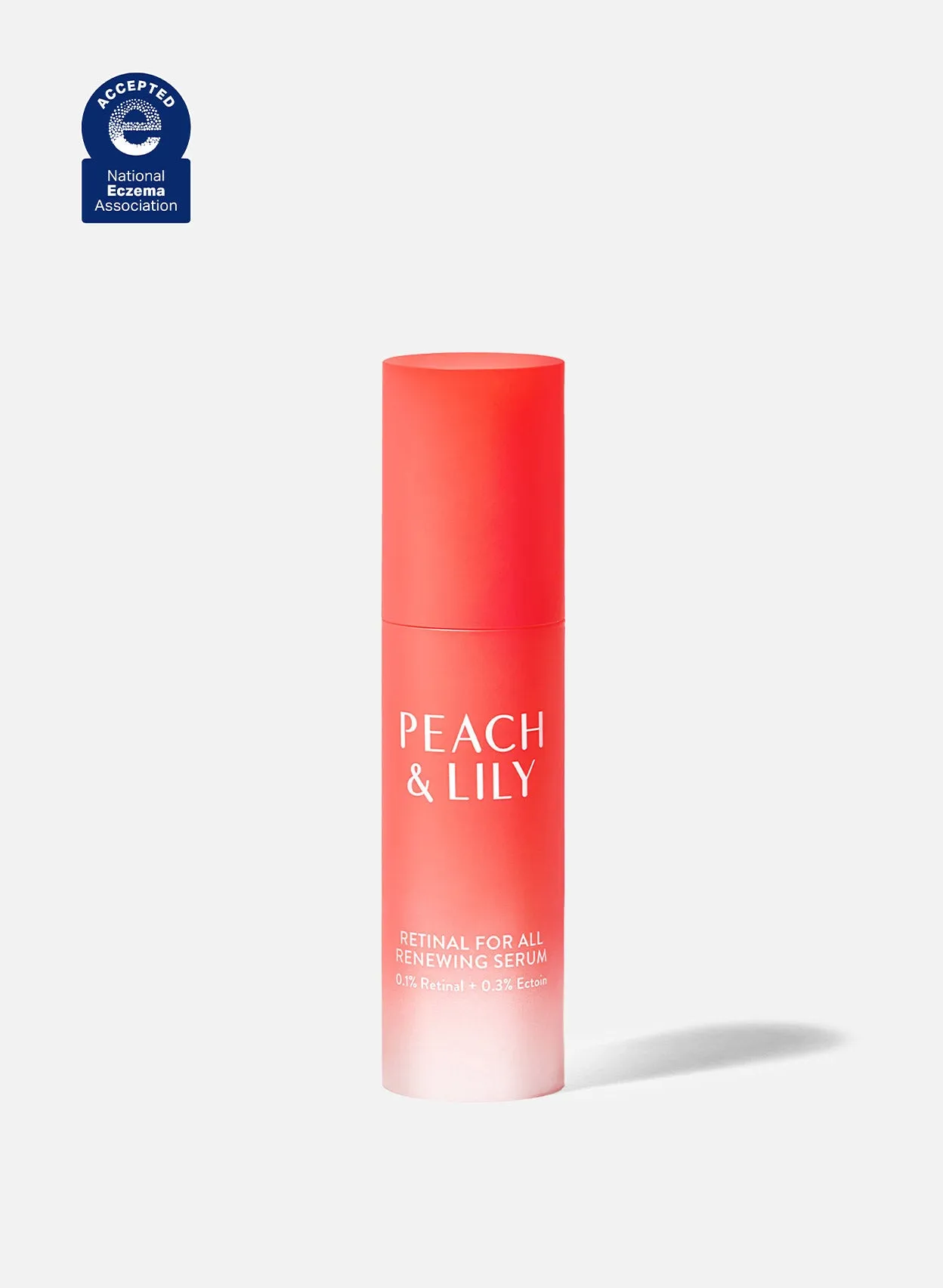
Retinal For All Renewing Serum (30 ml)
Peptides are a different ingredient group
Peptides are made from linked amino acids, which are building blocks of proteins. In skincare, you'll see different peptides in different formulas; UChicago Medicine AdventHealth's introduction explains this ingredient group in more detail.
For a practical example, our Peptide Pro Firming Moisturizer combines twelve signal and carrier peptides with vegan collagen, tremella mushroom, hyaluronic acid, and squalane. Its goal is visibly firmer, smoother, plumper skin, delivered in the step you already use to moisturize. The 50 ml jar is $45.
You'll also find a peptide complex in Glass Skin Refining Serum, alongside niacinamide and multi-weight hyaluronic acid. That formula helps skin look calmer, brighter, and plumper. An ingredient category can appear in products with different roles, so look at the whole formula when choosing.
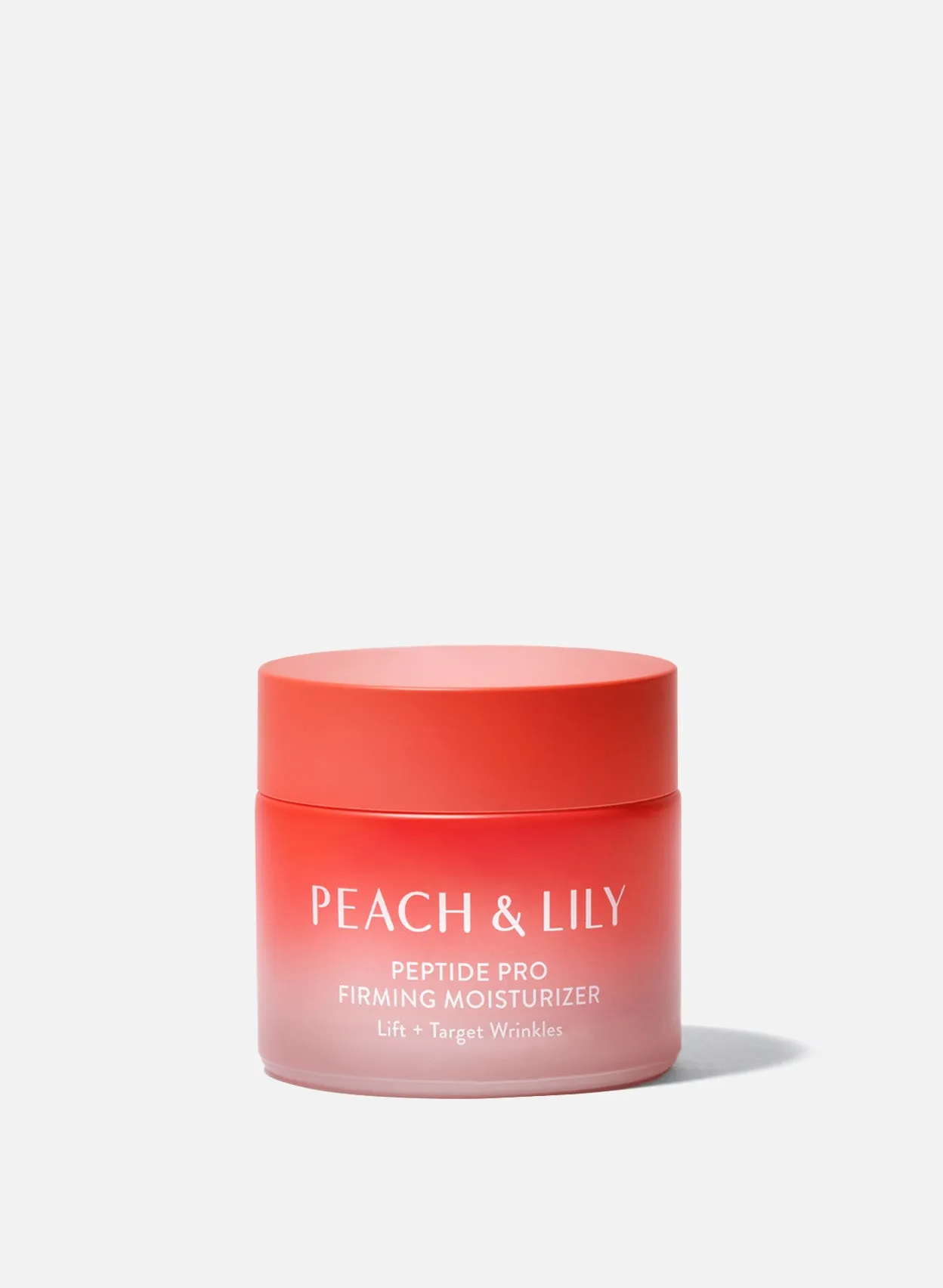
Peptide Pro Firming Moisturizer (50 ml)
Choose the role you want to add
| Your goal | A starting point | The routine decision |
|---|---|---|
| Care for the look of fine lines, dark spots, and rough texture | Retinal For All Renewing Serum | Whether you want to introduce a retinoid serum |
| Visibly firmer, smoother, plumper skin in a cream | Peptide Pro Firming Moisturizer | Whether to change your moisturizing step |
| A serum focused on firmer, smoother-looking skin | Copper Peptide Pro Firming Serum | Whether to add a focused serum to a routine you already like |
There isn't a need to declare one ingredient family the winner. Someone looking to change their moisturizer has a different decision from someone ready to introduce a retinoid. Start where your goal and your routine meet.
How to approach a new retinoid
A gentle approach gives you space to learn how your skin responds. Dermatologists recommend starting retinoids gradually, using them at night, and keeping daytime sun protection consistent. Avoid retinoids during pregnancy; seek advice before starting if your skin is persistently red or reactive.
Follow the directions for your exact formula, including the amount and application areas. Keep your other products familiar while you introduce it. You don't have to add a new exfoliant, moisturizer, and serum in the same week to make the routine feel complete.
If you have a special event coming up, don't turn the date into a deadline for your skin. A settled routine you already enjoy can be a better choice than rushing a new active into the calendar.
Can peptides and retinoids belong in the same routine?
You may choose products from both categories, but the names alone don't settle how to layer two particular formulas. Check each product's directions, introduce changes separately, and ask for guidance if you use prescription skincare or have ongoing sensitivity.
The routine can stay straightforward. Use the serum step for the treatment you've chosen, the moisturizer step for moisture and any supported benefits your cream offers, and sunscreen in the morning. A peptide cream can be the way you include peptide care without adding a second serum.
If you'd like a closer look at those choices, explore our guides to firming serums and firming creams. Each focuses on the practical difference between formats.
FAQS
The questions behind the ingredient names
Is retinal the same as retinol?
No. Both belong to the vitamin A family, but they are different ingredients. Our Retinal For All Renewing Serum contains retinal, also called retinaldehyde. Check the specific ingredient and product directions instead of using the names interchangeably.
Are more peptides always better?
A number alone doesn't tell you how a finished formula will suit your skin or goals. Consider the product's stated benefits, format, and directions. Our twelve-peptide moisturizer is one way to include firming care within a moisturizing step.
Can I keep my routine short?
Absolutely. If you'd like peptide care without another serum, consider a peptide moisturizer. If you're exploring retinal, begin with that one change and keep the rest familiar. A routine can be thoughtful without being long.
Prices as of September 2, 2026. See product pages for current pricing and sizes.
Choose the step that fits your goal
Explore firming care within your everyday moisturizer.