Cleansing Oil Comparison: Plant vs. Mineral Oil
Cleansing oil comparison weighs Ginger Melt against lower-priced mineral-oil cleansers on removal claims, rinse directions, finish and price by size.
Choose the finished formula that fits your routine and budget.
- Compare each cleanser’s removal claims, rinse directions, finish, and size-specific price.
- Compare the whole formula, its removal claims, rinse directions, finish, and price for the size you will use.
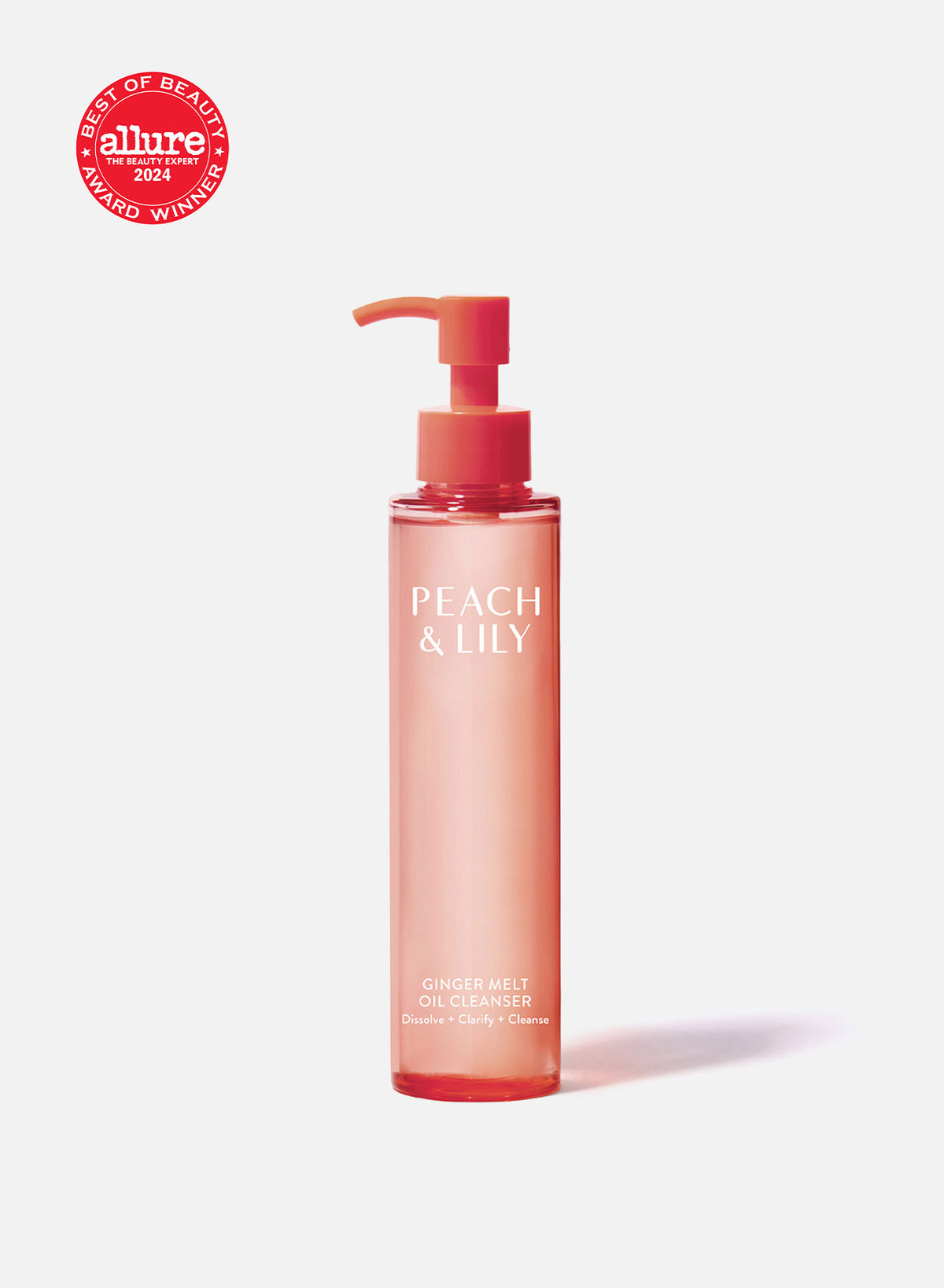
- Our Ginger Melt Oil Cleanser pairs sunflower and grapeseed seed oils with maker-described makeup and sunscreen removal and a non-greasy finish.
- Its 150 ml size is $35 in Peach & Lily’s U.S. regular-price snapshot read September 2, 2026.
A cleansing oil comparison should start with what the finished cleanser does, not the word “plant” or “mineral” on its ingredient list. A plant-oil formula can suit you if you prefer its listed oils and its removal and finish claims fit your routine. A lower-priced mineral-oil cleanser can suit a budget-first choice when its maker’s removal claims and rinse directions also work for you.
Peach & Lily publishes this comparison to help you weigh removal claims, rinse directions, finish, and size-specific price. Our Ginger Melt Oil Cleanser is a plant-oil-containing option for removing makeup and sunscreen, while research on a tested mineral-oil-containing cleansing formula shows why oil origin alone cannot settle the choice.
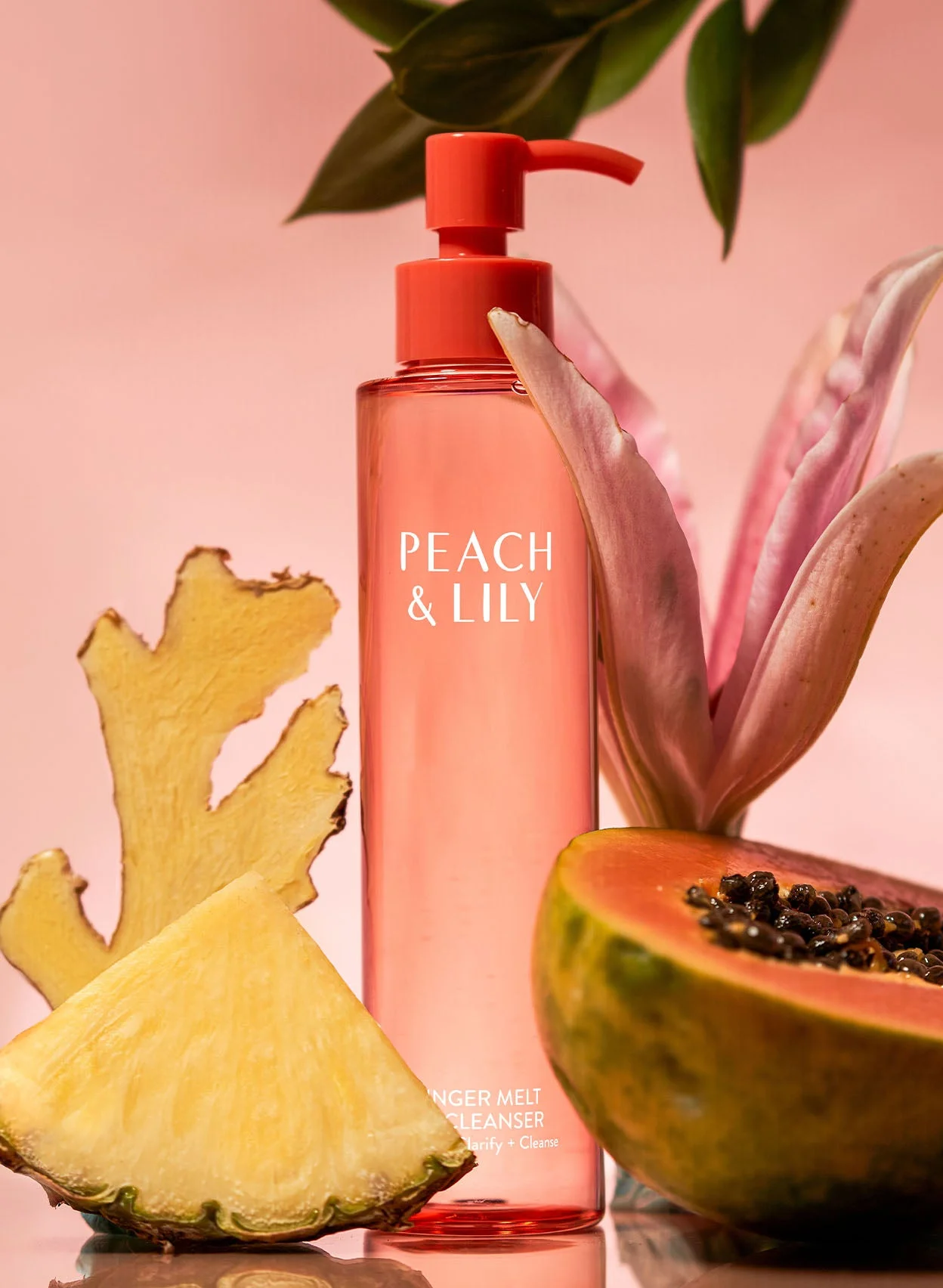
Ginger Melt Oil Cleanser
Does a plant-oil label justify paying more?
Not by itself. Plant oil and mineral oil name ingredient types, while the cleanser you use is a complete formula with its own use directions. A higher price can make sense when the finished product’s ingredients, use, and feel match your priorities; the oil source alone does not establish that it will clean better.
A study of water-in-oil microemulsions, small oil-and-water cleansing mixtures tested 20 lab samples using three emulsifying systems and seven oils to remove oily makeup. The researchers measured how the mixtures spread across a surface and how well they emulsified. In those test formulas, the viscosity of the oil and the emulsifying system affected wettability, a measure of how readily a liquid spreads across a surface. That result points to a formulation question: the oil is one part of a makeup-removal system, not a stand-alone performance score.
The study also found that oils with higher polarity generally showed greater emulsifying activity in the tested mixtures, with oleic acid as the exception.
In a review of mineral oil research in skin care, human tests of formulas containing up to 30% mineral oil found no comedogenic potential in those tested formulas. Comedogenic refers to a tendency to contribute to clogged pores.
What should you compare besides the oil source?
When package sizes differ, comparing price per 100 ml gives you a clearer sense of relative value. That gives you a practical comparison between a specific product such as Ginger Melt and any mineral-oil cleanser you are considering, without assuming that all products in either category behave alike.
| What to compare | Plant-oil example: Ginger Melt Oil Cleanser | When you compare a mineral-oil cleanser |
|---|---|---|
| Oil source | The product description names sunflower and grapeseed seed oils. | The sunscreen-removal trial tested an oil blend containing mineral oil and three other major lipids. |
| Removal role | Removes makeup, sunscreen, excess oil, and impurities. | Choose a cleanser whose stated removal job covers the sunscreen or makeup you wear. |
| Directions | Use 1–2 pumps on a dry face with clean, dry hands, massage, rinse with lukewarm water, then follow with a water-based cleanser. | Follow the maker’s instructions for applying, adding water, and rinsing; those steps determine whether the routine feels manageable to you. |
| Finish | No greasy residue. | Choose a finish that matches the after-feel you prefer. |
| Price | The 150 ml size is $35 and the 300 ml size is $49 in Peach & Lily’s U.S. regular-price snapshot read September 2, 2026. | Compare the size-specific price and how much product you expect to use, rather than the oil-source label. |
Sunscreen removal is one practical reason to consider a cleansing oil. In a study of 20 participants, researchers compared water, a foaming cleanser, and a cleansing oil for removing one non-waterproof and one waterproof sunscreen. The cleansing oil’s major lipids included mineral oil, isopropyl myristate, C12–C15 alkyl benzoate, and dicaprylyl carbonate. For the tested waterproof sunscreen, the average residue rate was 5.8% with the oil, 36.8% with the foaming cleanser, and 59.3% with water. For the non-waterproof sunscreen, average residue rates were 13.4% with cleansing oil, 15.6% with foaming cleanser, and 54.0% with water in the 2020 sunscreen-removal trial.
Researchers took photos before sunscreen application, after applying sunscreen, and after washing, then assessed removal from the images and participants’ reports. The study excluded people with facial skin disease and asked participants not to apply cosmetics before testing. Researchers applied 1 mg of sunscreen per square centimeter of skin, an amount the authors chose to reflect everyday use; they noted results may differ from the 2 mg per square centimeter used in sunscreen protection-rating tests.
Participants also reported how their faces felt after washing. Eight people in the foaming-cleanser group and one in the cleansing-oil group reported dry skin after washing. That small study finding gives you another reason to compare comfort along with residue, while keeping in mind that the study tested one cleansing oil and two sunscreen products.
Participants’ own reports added a rinse perspective: all participants said the cleansing oil cleaned the face after both sunscreens, while all reported a sticky film after water alone for the waterproof sunscreen; two said the foaming cleanser cleaned the face.
The AAD also recommends rinsing with lukewarm water and patting dry with a soft towel. The American Academy of Dermatology’s face-washing guidance recommends a gentle, non-abrasive cleanser, lukewarm water, and applying cleanser with your fingertips. Those are useful habits with either oil source. A familiar rinse routine and gentle application give you a clearer basis for choosing than the plant-versus-mineral label alone.
A review of cleansing formulations explains that surfactants help cleanse skin but can also remove skin components and remain in the outer skin after rinsing, affecting the skin barrier.
Make the comparison specific to your evening. For waterproof sunscreen, the trial below offers one useful data point; choose your cleanser by its stated removal job and directions for the products you wear. If you wear little or no makeup, you may place more weight on a comfortable rinse, the cleanser’s other stated uses, and the amount you want to spend. The same product can be a good match for one routine and an unnecessary premium for another.
A simple at-home comparison can focus on the feel and effort you notice in your own routine. On an evening when you wear your usual sunscreen or makeup, follow one cleanser’s directions and notice whether the removal step feels straightforward, how easily it rinses, and how your skin feels afterward. After cleansing, notice whether your skin feels comfortable or tight; that response is personal to your routine.
Which cleanser fits your priorities?
Choose the product whose published claims and directions answer your own needs, then compare its price per size.
Choose Ginger Melt when you want its listed plant oils and makeup-removal claims
Our Ginger Melt Oil Cleanser is the clear fit if you want a plant-oil-containing cleanser with sunflower and grapeseed seed oils and maker-described removal of makeup, sunscreen, excess oil, and impurities. It also leaves no greasy residue.
The directions make the product’s place in a routine clear: apply 1–2 pumps to a dry face with clean, dry hands, massage it in, rinse with lukewarm water, and follow with a water-based cleanser. That two-step direction suits you if you already like a double-cleanse routine.
By simple division, those sizes work out to about $23.33 and $16.33 per 100 ml, respectively, before tax or shipping. The larger size has the lower listed price per volume if you expect to use the cleanser regularly; the 150 ml size has the lower upfront price.
Unit price can make a size comparison easier. For example, if another cleanser costs $20 for 200 ml, that example price equals $10 per 100 ml. You can compare that assumed figure with Ginger Melt’s $16.33 per 100 ml for the 300 ml size, then decide whether its listed oils, removal claims, and finish are worth the difference to you.
Choose a lower-priced mineral-oil cleanser when budget leads
A mineral-oil cleanser can be the budget-first choice if its current price is lower than the Ginger Melt size you would buy and its maker’s removal role and rinse directions suit you. A product with a lower price is a useful saving only when it does the job you need and fits your washing routine.
Prioritize the directions and finish that make cleansing easy
If rinsing cleanly is your main concern, choose by a maker-described finish and use directions that you can follow comfortably. Ginger Melt’s product description specifically claims no greasy residue, and its directions include rinsing with lukewarm water before a second, water-based cleanser. If a competing mineral-oil cleanser has a finish or water-rinse process that sounds better suited to your routine, its source category need not count against it.
If both products meet your removal needs, let the trade-off be the one you care about most. Choose Ginger Melt if its listed plant oils and stated finish justify its price for you. Choose the lower-priced mineral-oil option if the price difference matters more and its own claims and instructions fit. If the budget cleanser’s removal description or rinse process does not fit, the lower price alone is a poor match.
FAQ
What face-washing habits does the AAD recommend?
The American Academy of Dermatology recommends a gentle, non-abrasive cleanser, lukewarm water, and fingertip application in its face-washing guidance. The AAD recommends washing twice daily and as soon as possible after heavy sweating, especially when wearing a hat or helmet.
Is mineral oil automatically pore-clogging?
No. A review of human tests reported no comedogenic potential for the tested formulations containing mineral oil up to 30%. Your choice still depends on the complete cleanser and how it feels in your routine.
Is Ginger Melt meant to be used alone?
Its directions place it first in an evening double cleanse: apply to a dry face, rinse with lukewarm water, and follow with a water-based cleanser. That sequence suits you if you prefer two cleansing steps.
Ginger Melt Oil Cleanser
See how these criteria hold up on the real thing.